PET plastic (Polyethylene Terephthalate)Polyethylene Terephthalate (PET) is widely used in food and beverage containers—such as water and soft drink bottles—as well as in food packaging, textile fibers, and packaging films. It is valued for its excellent barrier properties against gases and moisture, which help preserve product quality and safety, making PET a reliable and widely approved material for food packaging applications. PET Plastic is marked with the Resin Identification Code #1, usually found inside a triangle on the bottom of containers.Our facilities located at two major Nigeria cities ( Lagos and Benin City), handles three types of post-consumer and post-industrial plastics |
|---|


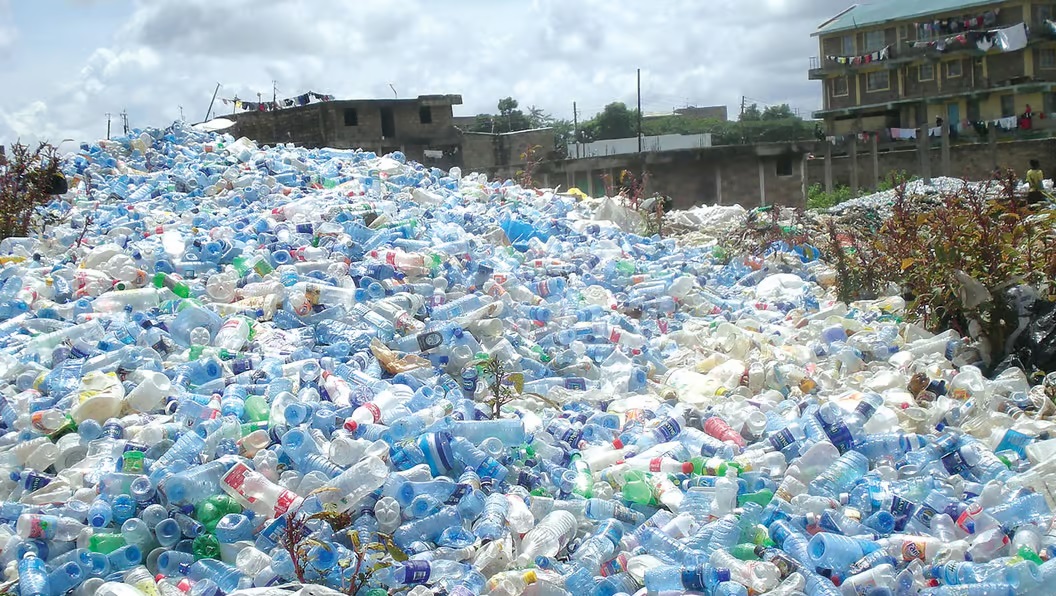
Our PET Capacity
We collect and processes high-quality, 75% clear/25% blue assorted bales suitable for bottle-to-bottle, fiber and any PET reprocessing.
Our annual PET collection capacity is 1242 tons. PET account for the largest part of the Materials we export and trade.
Our processing Stages
We follow a structured four-stage processing system to prepare PET bales to the required quality standards before supplying them to our clients. These stages include:
Post-consumer PET waste (primarily bottles and containers) is collected from households, commercial facilities, collection centers, and informal waste streams. Materials are aggregated at recycling facilities for further processing..
Collected PET waste undergoes manual and mechanical sorting to remove non-PET materials such as PVC, metals, paper, labels and other contaminants. Color separation (clear, blue, green, mixed) may also be performed at this stage.

The processed PET material is compacted using hydraulic balers into dense, standardized bales. Baling optimizes storage, handling, and transportation efficiency.
Finished PET bales are securely stored and prepared for dispatch to export markets, supported by documentation and traceability records.